A while back, I noticed the bathroom sink was draining slower than usual. It wasn’t blocked completely. Just enough to be annoying. I didn’t feel like taking anything apart right away, so I tried a simple fix using what was already in the kitchen. It wasn’t dramatic, but it did help clear things up. That’s usually how this method is used. It’s a first step, not a full repair.
If you’re looking into how to clear a drain with vinegar and baking soda, the process is straightforward. Most of the top guidance on this topic covers the same main points. It explains how the reaction works, how to apply it, what types of clogs it can help with, and where it falls short. It also covers safety and when to move on to other methods.
Here’s a clear breakdown.
Why vinegar and baking soda are used
Vinegar and baking soda are common household items. When combined, they create a bubbling reaction.
This reaction can:
- Help loosen light buildup
- Break up grease in some cases
- Move debris slightly within the pipe
It’s not a strong chemical cleaner. It works best on mild clogs or slow drains.
What this method works best for
This approach is useful for:
- Slow drains
- Minor buildup
- Regular maintenance
It may help with:
- Soap residue
- Light grease
- Small amounts of debris
It is less effective for:
- Solid blockages
- Hair clogs deep in the pipe
- Objects stuck in the drain
Understanding this helps set expectations.
Gather what you need
You don’t need much to get started.
Basic supplies include:
- Baking soda
- White vinegar
- Hot or boiling water
- A stopper or cloth to cover the drain
These are common items found in most homes.
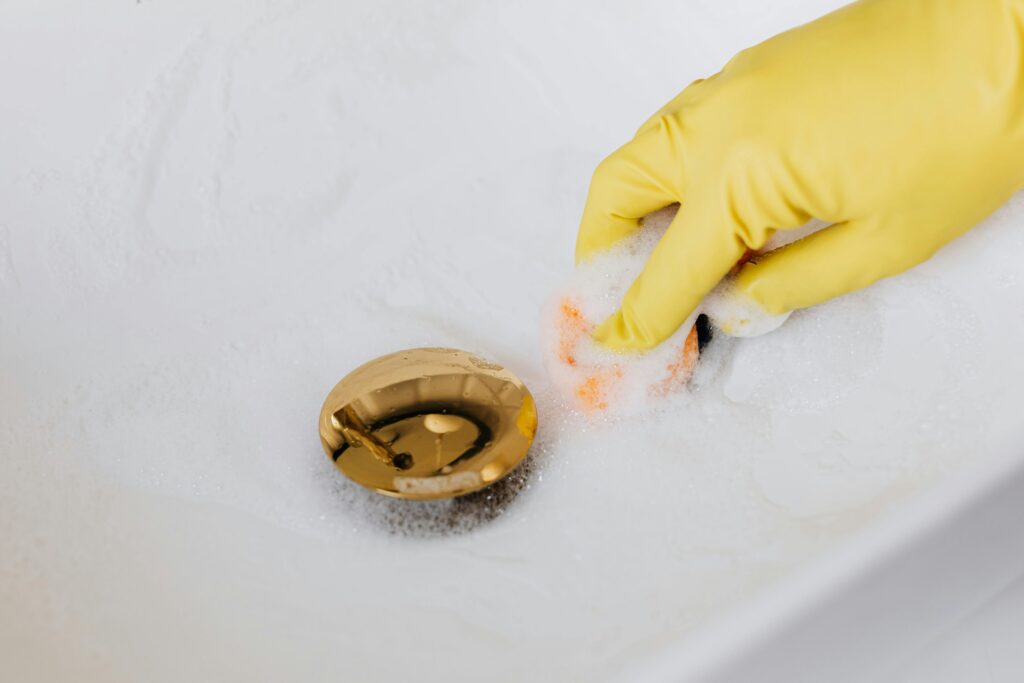
Start by clearing the drain opening
Before adding anything, remove visible debris.
This may include:
- Hair
- Food particles
- Soap buildup
Clearing the surface helps the mixture reach deeper into the drain.
Pour baking soda into the drain
Start with baking soda.
A typical amount is:
- About half a cup
Pour it directly into the drain. Try to get as much as possible into the pipe rather than letting it sit on the surface.
Add vinegar
Next, pour vinegar into the drain.
Use:
- About one cup
When the vinegar meets the baking soda, it will begin to fizz. This reaction is what helps loosen buildup.
Cover the drain
After adding vinegar, cover the drain.
You can use:
- A stopper
- A cloth
Covering the drain keeps the reaction contained. It pushes the bubbling action down into the pipe instead of letting it escape upward.
Let the mixture sit
Give the mixture time to work.
Most guides suggest:
- Waiting 10 to 15 minutes
During this time, the reaction helps break down some of the buildup inside the pipe.
Flush with hot water
After waiting, flush the drain with hot water.
Use:
- A kettle of boiling water if safe for your pipes
- Or very hot tap water
This helps move loosened debris through the system.
Repeat if needed
If the drain is still slow, you can repeat the process.
Sometimes:
- One treatment is enough
- Other times, it takes a few attempts
If there is no improvement after a couple of tries, the clog may be too strong for this method.
Why the method works
The reaction between vinegar and baking soda produces carbon dioxide gas. This creates pressure and bubbling.
This can:
- Dislodge light debris
- Help move buildup along
- Improve flow slightly
It’s a gentle method compared to chemical cleaners.
Limitations of this approach
It’s important to understand what this method cannot do.
It will not:
- Break down large or solid clogs
- Remove heavy grease buildup
- Pull out hair deep in the pipe
In these cases, you may need other tools or methods.
Alternative methods to consider
If vinegar and baking soda do not work, other options include:
Plunger
A plunger can create pressure to move a clog.
Drain snake or auger
This tool reaches into the pipe to remove blockages.
Removing the trap
In some cases, taking apart the pipe under the sink can clear the clog.
Each method works differently depending on the type of blockage.
When to avoid this method
There are situations where vinegar and baking soda may not be the best choice.
Avoid using it if:
- You have recently used chemical cleaners
- The pipes are very old or fragile
- The clog is severe and causing backups
Mixing substances or delaying proper repair can make things worse.
Safety considerations
This method is generally safe, but a few precautions help.
Keep in mind:
- Avoid mixing with other cleaning chemicals
- Use boiling water carefully
- Protect your hands if handling debris
Simple care reduces the risk of accidents.
Preventing future clogs
Once the drain is clear, a few habits can help prevent problems.
These include:
- Avoiding pouring grease down the drain
- Using drain covers to catch debris
- Running hot water after use
- Cleaning drains regularly
Preventative care reduces the need for frequent fixes.
Using the method for maintenance
Some people use vinegar and baking soda as a regular maintenance step.
For example:
- Once a month to keep drains clear
- After noticing early signs of slow drainage
It can help maintain flow, even if it doesn’t solve major issues.
A practical way to look at it
Clearing a drain with vinegar and baking soda is a simple first step. It works best for minor problems and regular upkeep.
That slow sink I mentioned earlier improved after one treatment. It didn’t fix everything permanently, but it bought some time before a deeper clean was needed.
That’s usually how this method fits in. It’s a low-effort option that can handle small issues. If the problem is bigger, you’ll need a stronger approach.
If you use it with the right expectations, it can be a useful part of basic home maintenance.